Student Loan Forgiveness 2026: Eligibility & Application Guide
The 2026 landscape of student loan forgiveness programs offers practical solutions for borrowers seeking debt relief, encompassing various federal initiatives and specific eligibility pathways for application.
The financial burden of student loans remains a significant concern for millions across the United States. As we look towards 2026, understanding the evolving landscape of student loan forgiveness 2026 programs is more crucial than ever. This comprehensive guide aims to demystify the complex world of student debt relief, offering practical solutions and clear pathways for eligibility and application.
Understanding the Federal Forgiveness Programs in 2026
The federal government continues to be the primary architect of student loan forgiveness initiatives. In 2026, several key programs are expected to remain active, albeit with potential adjustments based on legislative changes and administrative priorities. These programs are designed to assist borrowers from various backgrounds, recognizing the diverse challenges they face in repaying educational debt.
Navigating these programs requires a clear understanding of their specific objectives and the populations they aim to serve. While the core principles often remain consistent, the details surrounding eligibility and the application process can evolve, making continuous vigilance essential for potential applicants.
Public Service Loan Forgiveness (PSLF)
The Public Service Loan Forgiveness (PSLF) program is a cornerstone of federal debt relief, offering a path to forgiveness for those dedicated to public service. In 2026, PSLF will continue to provide debt cancellation for borrowers who have made 120 qualifying monthly payments while working full-time for a qualifying employer. This includes government organizations at any level (federal, state, local, or tribal) and non-profit organizations that are tax-exempt under Section 501(c)(3) of the Internal Revenue Code.
- Qualifying Employment: Employment with a government agency or a 501(c)(3) non-profit.
- Loan Type: Only Direct Loans qualify. Federal Family Education Loan (FFEL) Program loans or Perkins Loans must be consolidated into a Direct Consolidation Loan to be eligible.
- Payment Requirement: 120 qualifying monthly payments, made under a qualifying repayment plan, after October 1, 2007.
The importance of ensuring your employer and loan types qualify cannot be overstated. Many past applicants have faced delays or rejections due to misunderstandings of these critical criteria. Regular submission of the PSLF Employment Certification Form is highly recommended to track progress and confirm eligibility over time.
Income-Driven Repayment (IDR) Plan Forgiveness
Income-Driven Repayment (IDR) plans offer a safety net for borrowers whose incomes are low relative to their student loan debt. These plans adjust monthly payments based on a borrower’s income and family size. After a specified period of payments, typically 20 or 25 years, any remaining balance on eligible federal student loans is forgiven.
The specific IDR plan a borrower is enrolled in will determine the forgiveness timeline. Common IDR plans include Revised Pay As You Earn (REPAYE), Pay As You Earn (PAYE), Income-Based Repayment (IBR), and Income-Contingent Repayment (ICR). Each plan has its own formula for calculating monthly payments and its own forgiveness period.
- Payment Period: Generally 20 or 25 years of qualifying payments.
- Loan Eligibility: Most federal student loans are eligible; private loans are not.
- Tax Implications: Forgiven amounts under IDR plans may be considered taxable income by the IRS, though this rule has seen temporary suspensions and could be subject to change.
It’s vital for borrowers to understand the nuances of each IDR plan and regularly recertify their income and family size to ensure their payments remain accurate and they continue to accrue qualifying payments towards forgiveness. The IDR program continues to be a lifeline for many struggling borrowers, offering manageable payments and a clear path to eventual debt relief.
Targeted Forgiveness Programs and Special Circumstances
Beyond the broad federal programs, several targeted forgiveness initiatives address specific professional fields or unique borrower circumstances. These programs often have more stringent eligibility requirements but can offer significant relief to those who qualify. Keeping abreast of these specialized options is crucial for anyone exploring the full spectrum of available aid in 2026.
These programs reflect a recognition that certain professions contribute significantly to society and that certain life events can severely impact a borrower’s ability to repay their loans. Understanding if you fit into one of these categories could unlock substantial forgiveness opportunities.
Teacher Loan Forgiveness
Teachers serving in low-income schools or educational service agencies may be eligible for Teacher Loan Forgiveness. This program can forgive up to $17,500 of Direct Subsidized and Unsubsidized Loans or Federal Stafford Loans after completing five consecutive years of full-time teaching. The specific amount of forgiveness depends on the subject taught. Highly qualified math, science, or special education teachers are eligible for the higher amount.
- Service Requirement: Five consecutive years of full-time teaching in a low-income school.
- Loan Type: Direct Subsidized/Unsubsidized Loans and Federal Stafford Loans.
- Forgiveness Amount: Up to $5,000 or $17,500, depending on the subject taught.
This program is distinct from PSLF, and it’s important for teachers to evaluate which program offers them the most benefit, as time spent teaching can only count towards one program at a time. Careful planning is key to maximizing forgiveness.
Perkins Loan Cancellation and Discharge
Although the Federal Perkins Loan Program ended in 2017, existing Perkins Loans may still be eligible for cancellation or discharge under certain conditions. This is particularly relevant for borrowers who received these loans prior to the program’s cessation. Eligibility often depends on the borrower’s occupation or specific circumstances.
Occupations that may qualify for Perkins Loan cancellation include teachers in low-income schools, special education teachers, early intervention service providers, nurses, medical technicians, law enforcement officers, public defenders, and librarians, among others. The percentage of the loan cancelled increases over time, typically reaching 100% after five years of qualifying service.
- Qualifying Professions: A wide range of public service and educational roles.
- Cancellation Schedule: A percentage of the loan is cancelled each year of qualifying service.
- Total Forgiveness: Can reach 100% after five years of eligible service.
Borrowers with Perkins Loans should consult their loan servicer or the Department of Education to determine their specific eligibility for cancellation or discharge, as the rules can be quite detailed and dependent on the specific dates of service and loan disbursement.
Eligibility Requirements and How to Apply
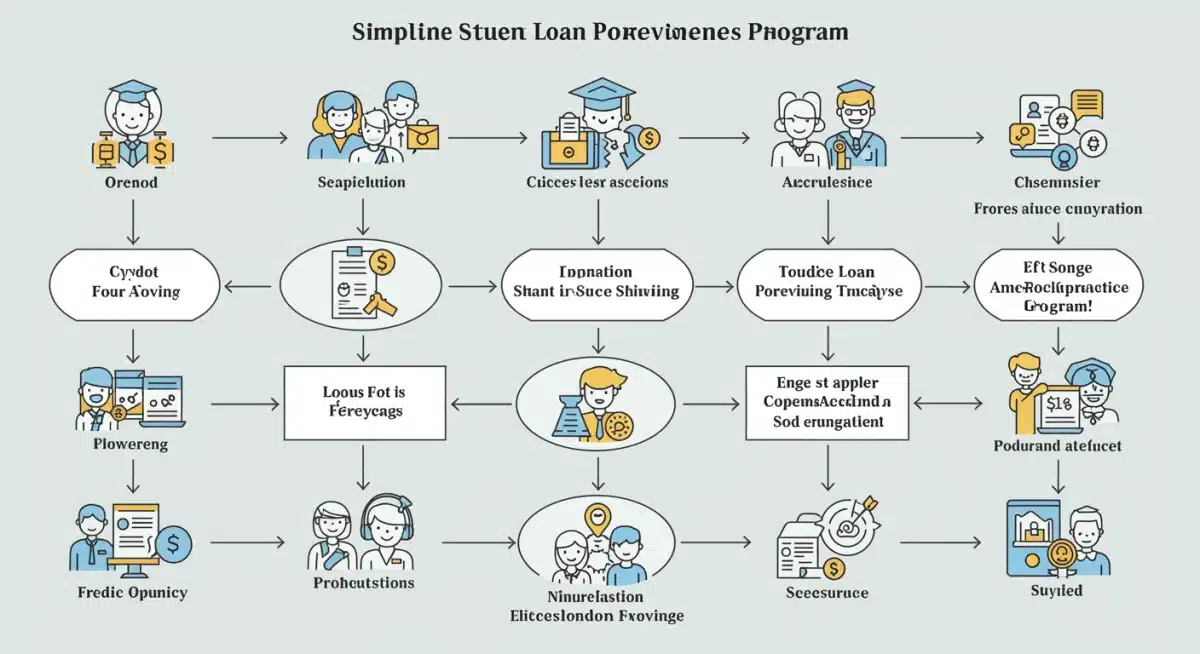
Understanding the eligibility criteria is the first and most critical step in pursuing student loan forgiveness. Each program has its own unique set of requirements, and a mismatch can lead to wasted effort and frustration. Proactive research and careful documentation are paramount for successful application in 2026.
The application process itself, while often streamlined, still demands attention to detail. Missing deadlines or providing incomplete information can significantly delay or even jeopardize your chances of receiving forgiveness. Therefore, approaching the application with diligence is essential.
General Eligibility Factors
While specific criteria vary by program, several general factors commonly determine eligibility for federal student loan forgiveness programs. These often include the type of loan you have, your employment history, and your payment history.
- Loan Type: Most federal forgiveness programs are exclusively for federal student loans (Direct Loans, FFEL, Perkins). Private student loans are almost never eligible.
- Employment: Many programs require specific types of employment (e.g., public service, teaching in low-income areas).
- Payment History: A consistent record of qualifying payments, often under specific repayment plans, is usually a prerequisite.
It’s crucial to consolidate older federal loans (like FFEL or Perkins) into a Direct Consolidation Loan if you aim for PSLF or certain IDR benefits, as this can make previously ineligible loans eligible. However, consolidating may reset your payment count for IDR forgiveness, so careful consideration is needed.
Navigating the Application Process
The application process for student loan forgiveness often involves submitting forms to your loan servicer or the Department of Education. For PSLF, the PSLF & Temporary Expanded PSLF (TEPSLF) Certification & Application is the key document. For IDR plans, you’ll typically apply through your loan servicer or StudentAid.gov.
- Gather Documentation: Collect employment verification, income records, and loan statements.
- Complete Forms Accurately: Double-check all information before submission to avoid delays.
- Track Progress: Keep copies of all submitted documents and correspondence, and regularly follow up on your application status.
Many programs now offer online application portals, which can simplify the process. However, even with online tools, understanding the required fields and attaching correct documentation remains critical. Don’t hesitate to contact your loan servicer or the Department of Education for clarification on any part of the application.
Potential Changes and Future Outlook for 2026
The landscape of student loan forgiveness is dynamic, influenced by legislative actions, executive orders, and economic conditions. While we anticipate certain programs to remain stable, potential changes are always on the horizon for 2026. Staying informed about these developments is crucial for borrowers planning their debt relief strategies.
Policy debates surrounding student debt are ongoing, and various proposals for reform or expansion of forgiveness programs frequently emerge. These discussions can lead to significant shifts in eligibility, program structure, or even the creation of new initiatives. Therefore, a forward-looking perspective is vital.
Legislative and Administrative Adjustments
Government policies regarding student loans can be influenced by changes in administration, new legislative priorities, or evolving economic data. In recent years, we’ve seen significant administrative actions, such as the IDR Account Adjustment, which retroactively counted certain periods of deferment and forbearance towards forgiveness. Such adjustments can have a profound impact on borrower eligibility and the timeline for forgiveness.
Future legislative efforts could introduce new broad-based forgiveness programs, modify existing ones, or alter the taxability of forgiven debt. Borrowers should monitor official government announcements and reputable financial news sources to stay updated on these potential changes. The political climate will play a significant role in shaping the future of student loan forgiveness.
Impact of Economic Factors
Economic conditions, such as inflation rates, employment levels, and overall economic growth, can also influence student loan policies. During periods of economic downturn or high inflation, there might be increased pressure for government intervention to alleviate financial stress on borrowers. Conversely, a robust economy might lead to less emphasis on broad forgiveness measures.
- Inflation: High inflation could increase calls for debt relief to support household budgets.
- Employment: Widespread unemployment might trigger expanded support for borrowers.
- Budgetary Constraints: Government budget discussions will always influence the scope and funding of forgiveness programs.
These economic factors can create a complex environment where policy decisions are made. Borrowers should consider how broader economic trends might indirectly affect the availability and terms of student loan forgiveness programs in 2026 and beyond.
Avoiding Scams and Seeking Legitimate Assistance
Unfortunately, the complexity and high demand for student loan forgiveness have created a fertile ground for scams. Borrowers must exercise extreme caution and rely solely on official sources for information and assistance. Protecting yourself from predatory practices is as important as understanding the legitimate pathways to debt relief.
Scammers often promise instant relief or charge exorbitant fees for services that are either free or can be easily performed by the borrower. A healthy dose of skepticism is your best defense against these fraudulent schemes.
Identifying Common Scams
Student loan scams often share common characteristics. They might promise immediate forgiveness, demand upfront fees, or pressure you into acting quickly. Unsolicited calls, emails, or social media messages offering too-good-to-be-true deals are major red flags. Legitimate government programs will never ask for payment to process your forgiveness application.
- Upfront Fees: Legitimate services do not charge for applications that are free through the Department of Education.
- Guaranteed Forgiveness: No one can guarantee forgiveness; it depends on your eligibility.
- Pressure Tactics: Scammers often create a sense of urgency to bypass critical thinking.
Be wary of any company that asks for your Federal Student Aid (FSA) ID or other sensitive personal information. Your loan servicer and the Department of Education will never ask for your FSA ID password.
Official Resources and Support
The most reliable sources for information and assistance regarding student loan forgiveness are the U.S. Department of Education and your official loan servicer. These entities provide accurate, up-to-date information and guidance on all federal programs. StudentAid.gov is the official website for federal student aid, offering comprehensive resources.
If you have questions, contact your loan servicer directly using the contact information found on official statements or on StudentAid.gov. You can also reach out to the Department of Education’s Federal Student Aid Information Center. These resources are free and designed to help you navigate the process safely and effectively.
Maximizing Your Chances for Forgiveness
Securing student loan forgiveness requires more than just meeting the basic criteria; it demands strategic planning, meticulous record-keeping, and consistent engagement with your loan servicer and the Department of Education. By proactively managing your loans and understanding the intricacies of the programs, you can significantly enhance your prospects for debt relief in 2026.
This proactive approach involves regularly reviewing your loan status, understanding your repayment options, and making informed decisions that align with your long-term financial goals. It’s about being an informed and engaged borrower throughout your repayment journey.
Strategic Planning and Record Keeping
One of the most crucial steps is to maintain impeccable records. This includes copies of all loan documents, payment confirmations, employment verification forms, and any correspondence with your loan servicer or the Department of Education. These records serve as your proof of eligibility and can be invaluable if discrepancies arise.
- Document Everything: Keep physical and digital copies of all relevant paperwork.
- Track Payments: Maintain a log of all qualifying payments made.
- Verify Employment: Regularly submit PSLF Employment Certification Forms if pursuing PSLF.
Beyond record-keeping, strategic planning involves choosing the right repayment plan from the outset. For example, if you anticipate working in public service, enrolling in an IDR plan is often a prerequisite for PSLF. Consulting with a non-profit credit counselor or student loan expert can provide personalized guidance.
Staying Informed and Proactive
The student loan landscape is not static. Policies can change, new programs may emerge, and existing ones might be modified. Therefore, staying informed is a continuous process. Regularly check official government websites, subscribe to newsletters from reputable organizations focused on student aid, and participate in webinars or informational sessions.
Being proactive also means not waiting until the last minute to address issues. If you experience a change in employment, income, or family size, update your loan servicer promptly. If you believe there’s an error in your payment count or eligibility status, address it immediately. Early intervention can prevent minor issues from becoming major obstacles to forgiveness.
Practical Solutions for Managing Student Debt in 2026
Even with the promise of forgiveness programs, effectively managing student debt requires a holistic approach. Beyond seeking forgiveness, borrowers should explore all available tools and strategies to make their repayment journey more manageable. These practical solutions can provide immediate relief and improve long-term financial stability.
A well-rounded strategy for student debt management combines understanding forgiveness options with smart repayment practices, ensuring that your financial health is prioritized at every stage.
Exploring Repayment Options
Before considering forgiveness, ensure you are on the most appropriate repayment plan. Standard repayment plans often have higher monthly payments but lead to faster repayment. Income-driven repayment plans offer lower monthly payments based on your income, making them suitable for those with financial constraints, while also serving as a path to forgiveness.
- Standard Repayment: Fixed payments over 10 years, faster debt elimination.
- Graduated Repayment: Payments start low and increase over time.
- Extended Repayment: Lower payments over a longer period (up to 25 years).
- IDR Plans: Payments based on income and family size, with potential for forgiveness.
Choosing the right plan can significantly impact your monthly budget and overall financial stress. Regularly re-evaluate your plan as your financial situation changes to ensure it still meets your needs and goals.
Budgeting and Financial Literacy
Effective budgeting is fundamental to managing any debt. Creating a detailed budget allows you to understand your income and expenses, identify areas where you can save, and ensure you have enough funds to cover your student loan payments. Financial literacy also includes understanding interest accrual, the impact of deferment or forbearance, and the benefits of making extra payments when possible.
Resources for financial literacy are abundant, from online courses and workshops to non-profit credit counseling services. Investing time in improving your financial knowledge can empower you to make better decisions regarding your student loans and overall financial well-being. This proactive approach ensures you are not just reacting to debt but actively managing it.
| Key Program | Brief Description |
|---|---|
| PSLF | Forgiveness after 120 qualifying payments for public service employees. |
| IDR Forgiveness | Remaining balance forgiven after 20-25 years of income-driven payments. |
| Teacher Loan Forgiveness | Up to $17,500 for teachers in low-income schools after 5 years. |
| Perkins Loan Cancellation | Cancellation for specific occupations, increasing with years of service. |
Frequently Asked Questions About Student Loan Forgiveness in 2026
PSLF is specifically for borrowers working in public service who make 120 qualifying payments. IDR forgiveness, on the other hand, is for any borrower on an income-driven plan, with remaining balances forgiven after 20-25 years of payments, regardless of employer. The key distinction lies in the employment requirement for PSLF.
No, federal student loan forgiveness programs, including PSLF and IDR forgiveness, are exclusively for federal student loans. Private student loans are issued by banks and private lenders and do not qualify for these federal relief initiatives. Borrowers with private loans must explore other repayment or refinancing options.
Historically, some forgiven loan amounts, particularly under IDR plans, could be considered taxable income. However, legislative changes have temporarily exempted certain forgiven federal student loans from federal income tax through December 31, 2025. Borrowers should monitor updates for 2026 as this policy could change.
To check your eligibility, visit StudentAid.gov, review the specific requirements for each program, and contact your loan servicer. For PSLF, use the PSLF Help Tool to confirm employer and payment eligibility. For IDR plans, apply through your servicer or StudentAid.gov to assess your income-based options.
If you suspect a student loan forgiveness scam, do not provide any personal information or make payments. Report the scam to the Federal Trade Commission (FTC) and the Consumer Financial Protection Bureau (CFPB). Always rely on official government websites and your loan servicer for accurate information and assistance regarding your loans.
Conclusion
The 2026 landscape of student loan forgiveness programs offers a beacon of hope for many borrowers grappling with educational debt. While the journey to debt relief can be intricate, armed with accurate information and a proactive approach, individuals can successfully navigate the various federal initiatives. Understanding eligibility, meticulously completing applications, and staying informed about potential policy changes are paramount. By leveraging these practical solutions and remaining vigilant against scams, borrowers can move closer to achieving financial freedom and securing their future.